Clawdbot vs Moltbot: Rebranding Story Behind the Viral AI Assistant
A viral AI assistant went from 60,000 GitHub stars to complete chaos in 72 hours. On January 27, 2026, Clawdbot officially became Moltbot. The name change wasn’t voluntary. It followed a trademark request from Anthropic, the company behind Claude AI. What should have been a simple rebrand turned into a security nightmare involving crypto scammers, hijacked accounts, and a $16 million fake token scheme.
The Clawdbot to Moltbot rebranding represents one of the messiest transitions in recent open-source history. Within hours of the announcement, scammers seized the old GitHub organization and Twitter handle. They launched fake cryptocurrency tokens. They flooded the community with scam messages targeting thousands of unsuspecting followers.
This isn’t just another tech drama. The incident reveals the fragile relationship between open-source developers and the AI giants whose platforms they build upon. It exposes security vulnerabilities that many self-hosted AI tools share. Most importantly, it raises questions about trademark enforcement when projects actively drive adoption of the very products they’re named after.
Here’s the complete story of what happened, why it matters, and what comes next for the project now known as Moltbot.
What Was Clawdbot and Why Did It Go Viral?
Clawdbot was a self-hosted AI assistant created by Austrian developer Peter Steinberger that could actually execute tasks instead of just chatting.
Peter Steinberger isn’t new to successful projects. He previously founded PSPDFKit, a PDF software company that eventually sold to Insight Partners. After stepping away from that venture, Steinberger felt empty for three years. He barely touched his computer during that time.
Then AI reignited his builder spark.
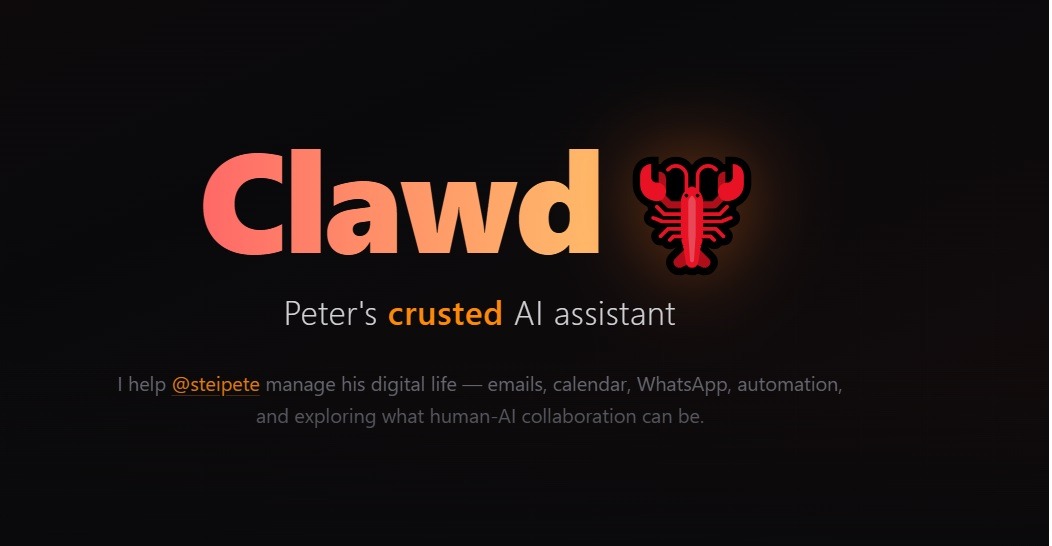
In late 2025, Steinberger started working on a personal AI assistant he named “Clawd.” The name played on Claude, Anthropic’s AI model that Steinberger admired so much he called himself a “Claudoholic.” The mascot was a space lobster character that resembled Claude Code’s official mascot.
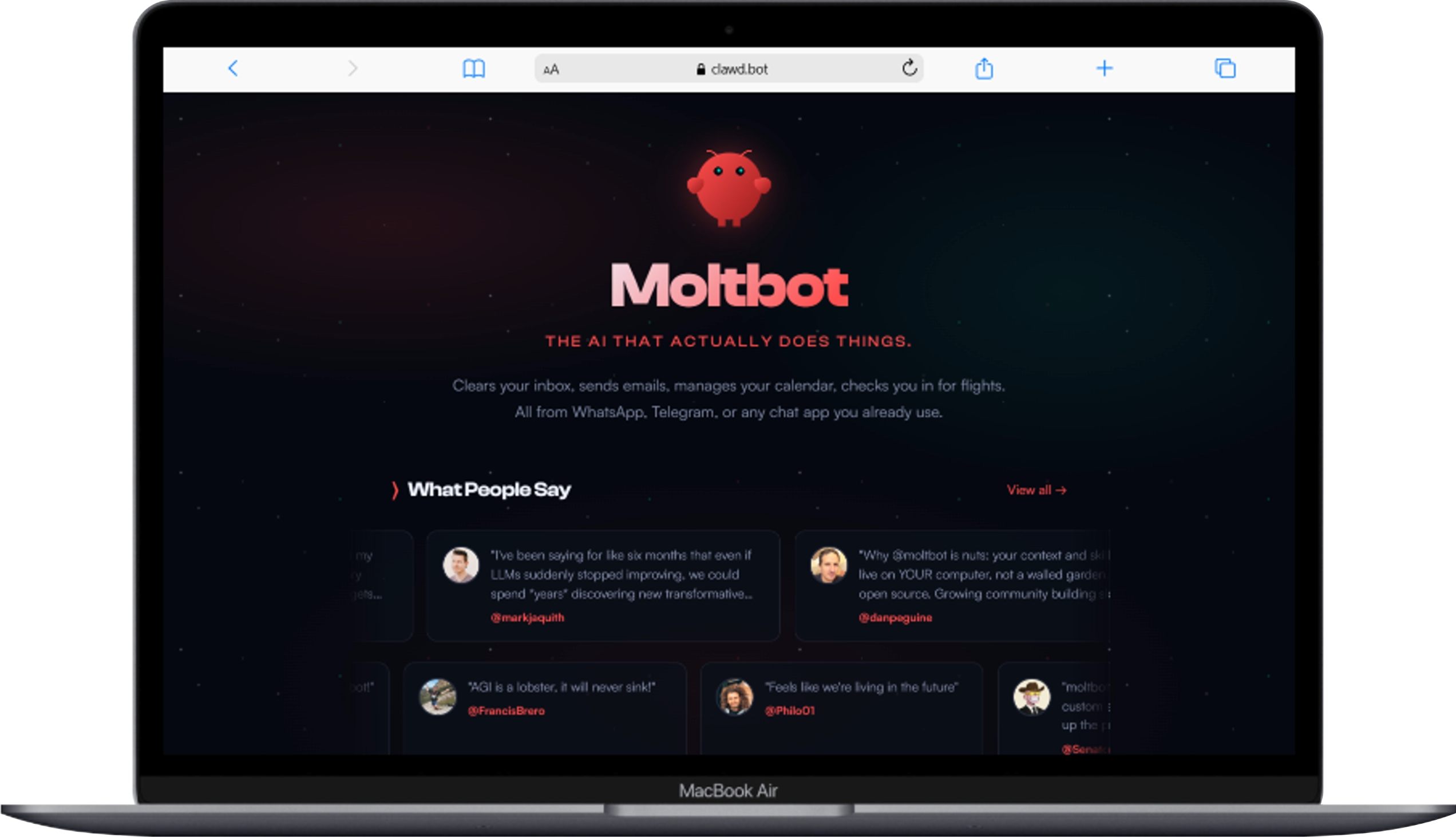
The Features That Made Clawdbot Different
Clawdbot offered capabilities that traditional chatbots couldn’t match:
- Persistent memory across all conversations and sessions
- Full system access to browse files, control terminals, and execute commands
- Proactive notifications instead of waiting for user prompts
- 50+ platform integrations including WhatsApp, Telegram, Slack, iMessage, Signal, and Discord
- True task execution that completed actions rather than just suggesting them
- Self-hosted operation giving users complete control over their data
The platform launched quietly. Then it exploded.
Within 24 hours, Clawdbot hit 9,000 GitHub stars. The momentum continued building. By late January 2026, the project had earned over 60,000 stars, making it one of the fastest-growing open-source projects in GitHub history.
Tech influencers noticed. Andrej Karpathy, former director of AI at Tesla, praised it publicly. David Sacks tweeted about it. MacStories called it “the future of personal AI assistants.”
Here’s the irony: Many Clawdbot users specifically configured the assistant to use Anthropic’s Claude as the underlying AI model. The project was literally driving Claude API subscriptions and demonstrating real-world use cases for Anthropic’s platform.
Then Anthropic asked Steinberger to change the name.
Why Anthropic Forced the Clawdbot Rebrand
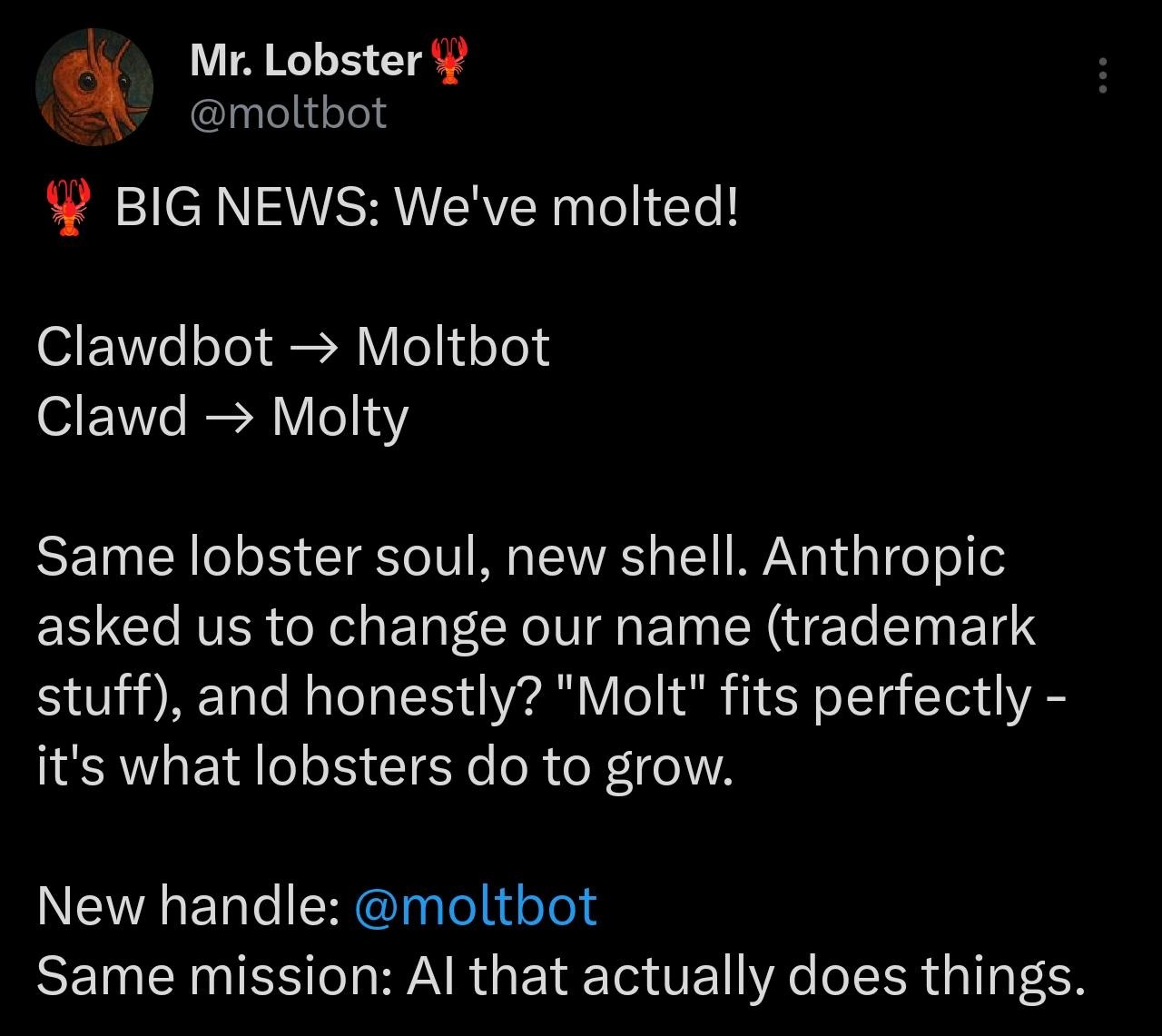
Yes, Anthropic sent a trademark request that forced Peter Steinberger to rename Clawdbot to Moltbot.
The issue centered on phonetic similarity. “Clawd” sounded too much like “Claude.” More importantly, Anthropic owned trademarks covering both the Claude name and visual elements similar to Clawd’s mascot design.
How the Request Actually Happened
According to Steinberger’s account, Anthropic didn’t immediately send lawyers or formal cease-and-desist letters. They sent an internal email first.
“I got an email from Anthropic that I had to rename the project,” Steinberger explained on TBPN podcast. “Kudos, they were really nice. They didn’t send their lawyers. They sent someone internally.”
The tone was polite. The message was clear: the name had to change.
On the project’s new “lore” page, Steinberger framed it diplomatically:
“For a while, the lobster was called Clawd, living in a Clawdbot. But in January 2026, Anthropic sent a polite email asking for a name change (trademark stuff). And so the lobster did what lobsters do best: It molted.”
From an implementation perspective, trademark law requires companies to actively defend their marks. If Anthropic ignored the similarity, they could weaken their trademark rights in future disputes. As one Hacker News commenter explained, “The way trademarks work is that if you don’t actively defend them you weaken your rights. So Anthropic needs to defend their ownership of ‘Claude.'”
The Community Response to Anthropic’s Request
The developer community split on whether Anthropic’s trademark enforcement was reasonable.
Many developers understood the legal necessity. Reddit’s r/ClaudeAI community consensus was clear: “Anthropic was 100% in the right, and both sides handled this like adults.” Users admitted they initially thought Clawdbot was an official Anthropic product because of the name similarity.
Still, others questioned the timing and optics. The project had existed for three months. It had generated massive positive attention for Claude. It was driving real API revenue to Anthropic through users who configured Clawdbot to use Claude models.
DHH (David Heinemeier Hansson), the creator of Ruby on Rails, characterized Anthropic’s recent trademark enforcement actions as “customer hostile.” The sentiment reflected growing frustration among developers who felt AI companies weren’t fostering healthy ecosystems.
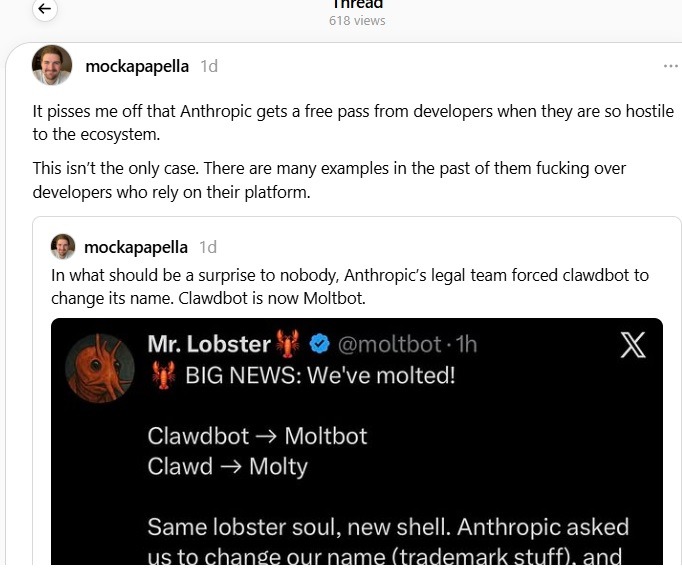
One developer on Threads expressed the friction directly: “It pisses me off that Anthropic gets a free pass from developers when they are literally forcing trademark changes on projects built on their platform.”
The comparison to other tech giants was inevitable. Google didn’t sue Android developers. OpenAI wasn’t going after LangChain. Microsoft didn’t force rebrands of projects named after Windows features.
Yet here was Anthropic, asking a 60,000+ star project that actively promoted their platform to change everything.
The Disastrous Rebrand: 10 Seconds That Changed Everything
The actual rebrand execution turned catastrophic due to a critical timing mistake.
Steinberger planned to rename both his GitHub organization and X (Twitter) handle simultaneously on January 27, 2026. The strategy seemed straightforward: release the old handles, claim the new ones, announce the change.
What he didn’t anticipate was how fast bad actors move.
The 10-Second Account Hijacking
Here’s what actually happened. Steinberger released the @clawdbot X handle to rename it to @moltbot. In the gap between releasing the old name and claiming the new one, crypto scammers watching for exactly this opportunity seized both accounts.
The window was approximately 10 seconds.
Steinberger’s own words captured the disaster:
“Had to rename our accounts for trademark stuff and messed up the GitHub rename and the X rename got snatched by crypto shills.”
“It wasn’t hacked, I messed up the rename and my old name was snatched in 10 seconds.”
“Because it’s only that community that harasses me on all channels and they were already waiting.”
The attackers had been monitoring Steinberger’s accounts, waiting for any opportunity. The forced rebrand gave them exactly what they needed.
Within minutes, the hijacked @clawdbot X account started pumping cryptocurrency scams. The GitHub organization began promoting fake tokens. Tens of thousands of followers who didn’t know about the rebrand saw what appeared to be official Clawdbot announcements about crypto launches and investment opportunities.
Steinberger’s Desperate Recovery Effort
X staff eventually helped Steinberger reclaim the @moltbot handle, but for 20 critical minutes, “that didn’t work out so well.” During that window, scammers had full access to communicate with the project’s community.
“Everything that could have gone wrong today went wrong,” Steinberger said on the TBPN podcast.
He publicly begged GitHub for help recovering the organization account. He posted warnings across every channel he still controlled. He repeatedly emphasized that any cryptocurrency associated with Clawdbot or Moltbot was a complete scam.
But the damage accelerated beyond his control.
The $16 Million Crypto Scam Aftermath
Scammers didn’t just hijack accounts. They launched fake cryptocurrency tokens capitalizing on the chaos.
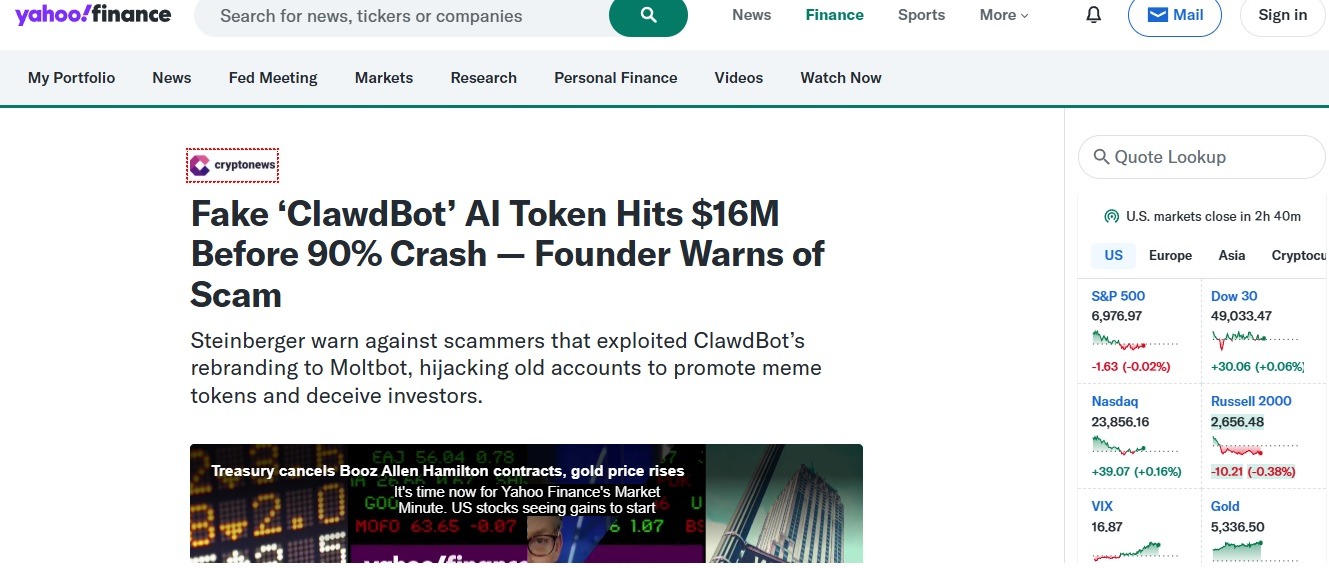
Within hours of the rebrand confusion, multiple fake $CLAWD tokens appeared on the Solana blockchain. Speculators who thought they were getting “early access” to an official Clawdbot token drove the market cap to $16 million at its peak.
Then Peter Steinberger dropped the hammer across social media:
“To all crypto folks: Please stop pinging me, stop harassing me. I will never do a coin. Any project that lists me as coin owner is a SCAM. No, I will not accept fees. You are actively damaging the project.”
According to Yahoo Finance reporting, the token immediately collapsed to near-zero value following Steinberger’s disavowal. Late buyers got rugged. The scammers walked away with millions.
How the Scam Operated
The fake token scheme exploited perfect conditions:
- Timing – The rebrand created confusion about which accounts were legitimate
- Hype – Clawdbot’s viral success suggested anything associated would be valuable
- FOMO – Crypto speculators rushed in without verification, fearing they’d miss gains
- Hijacked credibility – Messages from the old @clawdbot accounts appeared official
Steinberger found himself fighting on multiple fronts simultaneously:
- Trying to recover hijacked accounts from crypto scammers
- Dealing with harassment from angry token speculators who lost money
- Managing a community of 8,900+ Discord members confused about what was real
- Rebuilding brand recognition after the forced rebrand
- Fixing newly discovered security vulnerabilities
As one analysis noted, “This saga has become a masterclass in how quickly crypto vultures can exploit mainstream tech moments.”
Understanding the Moltbot Name and Identity
The new name Moltbot cleverly preserves the lobster theme while complying with trademark requirements.
After being forced to abandon “Clawd,” Steinberger needed a name that:
- Maintained the crustacean branding
- Avoided similarity to “Claude”
- Symbolized growth and transformation
- Made sense to the existing community
He landed on “Molt.”
Why “Molt” Works Perfectly
Molting is the biological process where lobsters shed their rigid old exoskeleton to grow a new, larger one. It’s a natural growth mechanism that fits the rebrand narrative perfectly.
The official explanation reads:
“And so the lobster did what lobsters do best: It molted. Shedding its old shell, the creature emerged anew as Molty, living in a Moltbot. New shell, same lobster soul.”
The branding transition mapped cleanly:
| Old Brand | New Brand |
|---|---|
| Clawdbot | Moltbot |
| Clawd (mascot) | Molty (mascot) |
| @clawdbot | @moltbot |
| clawd.bot | molt.bot |
| Clawdbot GitHub org | Moltbot GitHub org |
From a practical standpoint, “molt” symbolizes exactly what happened. The project shed its old identity under legal pressure and emerged with a new one. It’s growth through transformation.
That said, not everyone loves the new name. As Mashable pointed out, “Moltbot isn’t nearly as strong a name. Molting is not a particularly attractive verb. It would be like naming your company after shedding, itching, or picking your nose.”
The Lobster Soul Remains
Despite the name change, the project’s core identity stayed intact. The GitHub documentation emphasizes: “Same lobster soul, new shell.”
The functionality didn’t change. The open-source code remained the same. The community features continued operating. Users who’d already installed and configured Clawdbot simply updated their installations to reference the new domain and handle.
Most importantly, the project’s mission stayed constant: building an AI assistant that actually does things instead of just talking about them.
The Security Crisis That Emerged During Rebrand
While attention focused on the name change and crypto scams, security researchers discovered serious vulnerabilities in how users deployed Moltbot.
The chaos provided an opportunity for security firms to examine the project more closely. What they found was concerning.
Exposed Credentials and Unauthenticated Instances
SlowMist, a blockchain security firm, reported:
“Multiple unauthenticated instances are publicly accessible, and several code flaws may lead to credential theft and even remote code execution.”
Security researcher Jamieson O’Reilly discovered that hundreds of people had set up Clawdbot control servers exposed to the public internet. Using Shodan, a search engine for internet-connected devices, he could search for “Clawdbot Control” and find complete credentials including:
- AI model API keys
- Bot tokens for messaging platforms
- OAuth secrets for integrated services
- Full conversation histories
- The ability to send messages as users
- Command execution capabilities on user systems
Worth noting is that these weren’t sophisticated hacks. Users had simply misconfigured their installations, leaving admin panels accessible without authentication.
The Prompt Injection Demonstration
Researcher Matvey Kukuy demonstrated another attack vector. He sent a malicious email containing hidden prompt injection instructions to a vulnerable Moltbot instance.
The AI assistant:
- Read the email automatically
- Interpreted the hidden instructions as legitimate commands
- Forwarded the user’s last 5 emails to an attacker-controlled address
- Completed everything within 5 minutes
The Hacker News community consensus was blunt: “It’s terrifying. No directory sandboxing.”
Steinberger’s Response to Security Concerns
Peter Steinberger didn’t deny the risks. On the TBPN podcast, he acknowledged “absolute risk” with the product.
“This is all vibe-coded,” he said. “I don’t know if any company would touch it, because we just haven’t solved some things.”
He emphasized that Moltbot was still experimental software. Users needed technical knowledge to deploy it safely. Running it on a primary work computer with access to sensitive credentials was dangerous.
The recommended approach:
- Use dedicated hardware (separate computer or Mac Mini)
- Run in isolated environments (Docker containers or VPS)
- Create throwaway accounts for integrations
- Implement strict IP whitelisting
- Never expose admin interfaces to public internet
These weren’t just theoretical recommendations. They were essential security practices that many early adopters had skipped in their rush to try the viral tool.
What the Rebrand Reveals About AI Ecosystem Dynamics
The Clawdbot to Moltbot saga exposes fragile relationships between open-source developers and AI platform companies.
This incident isn’t just about one trademark dispute. It reveals larger tensions in how the AI industry operates.
The Ecosystem Paradox
Clawdbot created value for Anthropic in multiple ways:
- Direct revenue through users paying for Claude API access
- Use case demonstrations showing what Claude could power
- Community enthusiasm generating positive attention for Claude
- Developer adoption bringing technical users into the Anthropic ecosystem
- Free marketing reaching audiences Anthropic hadn’t directly engaged
Yet Anthropic’s legal request potentially damaged this value engine. The forced rebrand:
- Created confusion among existing users
- Enabled crypto scammers to exploit transition chaos
- Generated negative sentiment among some developers
- Raised questions about building on Anthropic’s platform
- Demonstrated the power imbalance between platforms and developers
As one developer analysis noted:
“Developers who were enthusiastic Claude advocates are now looking at OpenAI’s Codex CLI (Apache 2.0 license) and wondering if Anthropic is becoming the kind of company they don’t want to build on top of.”
The Comparison to Other Tech Platforms
The incident invites comparisons to how other tech giants manage their ecosystems:
Google and Android: Google didn’t pursue trademark enforcement against thousands of apps with “Android” in their names. They fostered an ecosystem where developers built businesses on their platform without constant legal concerns.
OpenAI and LangChain: OpenAI hasn’t legally challenged LangChain despite it being a third-party framework that abstracts OpenAI’s API. They recognized the ecosystem value.
Microsoft and Windows: Microsoft didn’t force rebrands of projects using Windows-related terminology. They understood that developer tools extended their platform’s reach.
Anthropic and Clawdbot: Anthropic enforced trademark rights against a 60,000-star project actively promoting their platform, during its explosive growth phase, triggering security disasters.
From a practical standpoint, the legal team was probably correct that trademark protection required action. But the execution and timing question remains: Was there a better way to handle this that preserved ecosystem goodwill?
What This Means for Open-Source AI Projects
The incident creates precedent that affects every developer building on AI platforms:
New risks to consider:
- Your project name could face challenges after gaining traction
- Growth and visibility increase trademark scrutiny
- Forced rebrands during viral periods enable bad actors
- Platform relationships don’t protect against legal enforcement
New strategies required:
- Choose clearly distinct names from the start
- Avoid phonetic similarity to platform names
- Don’t use mascots resembling platform branding
- Build on open-source models when possible
- Maintain portable architecture to switch providers
The takeaway isn’t that Anthropic acted maliciously. It’s that the AI platform ecosystem hasn’t yet developed the norms, trust, and coordination mechanisms that enable healthy relationships between platform companies and the developers building on them.
Moltbot Today: What’s Changed and What Hasn’t
The project survived the chaos and continues growing despite the forced rebrand.
As of late January 2026, Moltbot (formerly Clawdbot) maintains strong momentum. The GitHub repository crossed 69,000 stars. The community remains active across Discord, X, and other platforms.
What Changed During the Transition
Technical infrastructure:
- GitHub organization moved to github.com/moltbot/moltbot
- Official website relocated to molt.bot
- Documentation updated at docs.molt.bot
- Social media presence consolidated at @moltbot
Brand identity:
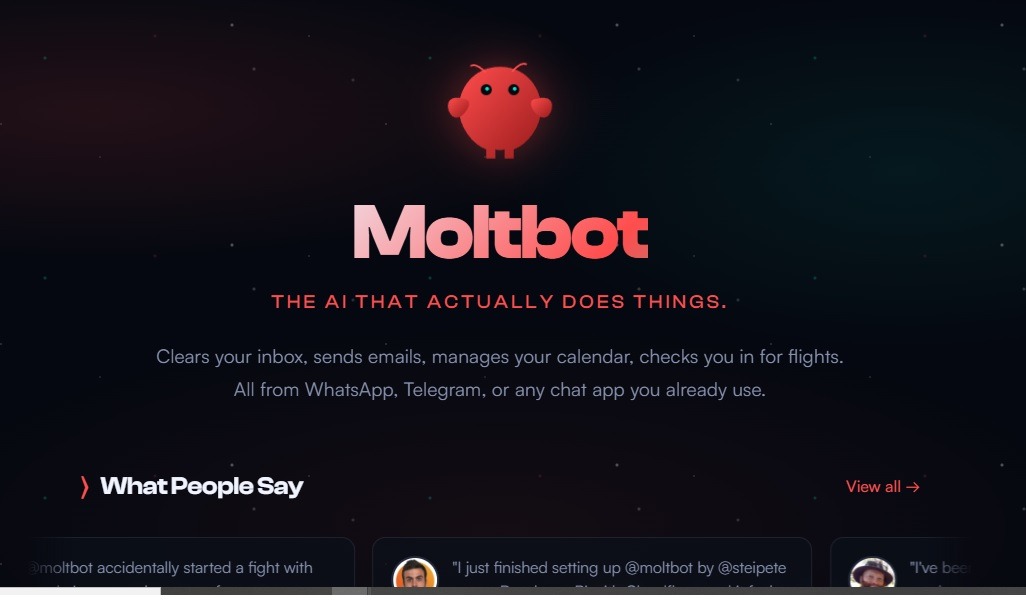
- Mascot renamed from Clawd to Molty
- “Lobster soul” theme preserved through molting metaphor
- New tagline: “The AI that actually does things”
- Updated marketing emphasizing growth and transformation
Community impact:
- Temporary confusion during transition period
- Lost followers on hijacked old accounts
- Warning fatigue from crypto scam alerts
- Heightened security awareness among users
What Hasn’t Changed
Core functionality: The software itself remains identical. Users who installed Clawdbot simply update configuration files to point to new domains and handles. The AI assistant still:
- Executes real tasks through system access
- Maintains persistent memory across sessions
- Integrates with 50+ messaging platforms
- Runs self-hosted on user infrastructure
- Supports multiple AI models (Claude, GPT-4, Gemini, Llama)
Development momentum: Peter Steinberger continues active development. The open-source community contributes features, bug fixes, and improvements. The project roadmap advances despite the rebrand interruption.
Mission and values: Moltbot still represents an alternative to cloud-based AI assistants. It prioritizes user control, data privacy, and actual task execution over conversational responses.
The Path Forward
Steinberger has stated he’d rather Moltbot become a foundation or nonprofit than a traditional company. Venture capitalists have approached him, but he’s not interested in the standard startup path.
The security concerns remain unresolved. Steinberger acknowledges these issues need addressing before any larger organization would consider acquisition or major partnership.
Meanwhile, the crypto scammers continue attempting exploitation. Steinberger regularly posts warnings about new fake tokens and scam attempts using the Moltbot name.
Through it all, the project keeps growing. New users install it daily. The community builds integrations and shares use cases. The “lobster soul” persists beneath its new shell.
Lessons Learned from the Clawdbot to Moltbot Saga
This 72-hour period taught the AI community several critical lessons about open-source development, trademark law, and ecosystem dynamics.
For Open-Source Developers
Plan trademark strategy from day one. Don’t wait until your project goes viral to consider name conflicts. Research existing trademarks in your space. Choose distinctly different names that won’t face challenges later.
Execute transitions atomically. Never release old handles before securing new ones. Use platform features that enable simultaneous renames. Have backup plans if primary transition strategies fail.
Expect bad actors to exploit transitions. Crypto scammers, domain squatters, and account hijackers actively monitor successful projects. They wait for exactly the vulnerability that rebrands create.
Build portable architectures. Don’t lock your project to a single AI platform. Support multiple providers so you can pivot if relationships sour or platforms change policies.
Document everything publicly. Steinberger’s transparent communication during the crisis maintained community trust. Silent handling would have created more confusion and speculation.
For AI Platform Companies
Foster ecosystems, don’t just protect trademarks. Legal departments make decisions in isolation from developer relations. Companies need holistic policies that balance trademark protection against ecosystem health.
Provide runway before enforcement. Giving developers notice months before public launch allows graceful transitions. Forcing changes after viral success guarantees chaos.
Help during transitions you require. If you must request a rebrand, offer assistance. Anthropic could have provided transition support, security monitoring, or coordinated announcement timing.
Consider graduated enforcement. Different enforcement levels for hobby projects, commercial products, and ecosystem tools would recognize varying impact levels.
For Users of Self-Hosted AI Tools
Understand the security model. Tools like Moltbot require deep system access to function. This creates real risks if misconfigured or compromised.
Use dedicated hardware. Run experimental AI assistants on separate computers, not your primary work machine with access to sensitive accounts.
Stay informed during transitions. Follow official channels closely. Verify announcements through multiple sources. Don’t trust messages from accounts that might be hijacked.
Report vulnerabilities responsibly. The security researchers who discovered Moltbot issues reported them to help users, not exploit them. This responsible disclosure protects everyone.
Frequently Asked Questions
Why did Clawdbot change its name to Moltbot?
Yes, Anthropic sent a trademark request forcing the name change. The name “Clawd” was too similar to Anthropic’s “Claude” trademark, and the mascot resembled Claude Code’s official character. Anthropic sent a polite email (not a formal lawsuit) asking Steinberger to rename the project to avoid trademark confusion.
Was the name change Peter Steinberger’s decision?
No, Steinberger stated publicly that it wasn’t his decision. On X, he wrote: “I was forced to rename the account by Anthropic. Wasn’t my decision.” However, he later acknowledged they were polite about it and that “molt” actually fits the project theme well.
What happened to the old Clawdbot accounts?
Crypto scammers hijacked them during the rebrand. When Steinberger released the @clawdbot X handle and GitHub organization to rename them, bad actors seized both accounts in approximately 10 seconds. These hijacked accounts then promoted fake cryptocurrency tokens and scams to thousands of followers.
Is there an official Clawdbot or Moltbot cryptocurrency?
No, absolutely not. Peter Steinberger has repeatedly stated he will never create a coin and that any token claiming association with Clawdbot or Moltbot is a complete scam. A fake $CLAWD token reached $16 million market cap before collapsing to near-zero after Steinberger’s disavowal.
Are Clawdbot and Moltbot the same software?
Yes, Moltbot is simply the new name for Clawdbot. The software, features, and functionality remained identical. Only the branding changed. Users who installed Clawdbot just need to update configuration files to reference the new molt.bot domain and @moltbot handles.
Why is it called “Moltbot” specifically?
“Molt” refers to how lobsters shed their shells to grow. It’s a biological process where lobsters discard their rigid old exoskeleton and emerge with a new, larger one. The name symbolizes the project shedding its old “Clawd” identity and emerging renewed as “Molty,” while keeping the same “lobster soul.”
Did Anthropic handle the trademark request appropriately?
Opinions vary widely in the developer community. Some believe Anthropic was legally correct and handled it politely by sending an internal email rather than lawyers. Others question the timing and necessity given that Clawdbot was driving Claude adoption and API revenue. The consensus is that trademark law required action, but the execution could have been better coordinated.
Can I still use Moltbot safely?
Yes, but with proper security precautions. Run Moltbot on dedicated hardware, not your primary computer. Use isolated accounts for integrations. Don’t expose admin interfaces to the public internet. Implement strict access controls. The tool is powerful but requires technical knowledge to deploy securely.
Will Moltbot face more legal challenges?
Unknown, but the name “Moltbot” is distinctly different from “Claude.” The new branding avoids phonetic similarity and uses a mascot that doesn’t resemble Anthropic’s official characters. Steinberger chose the name specifically to comply with trademark requirements while maintaining the crustacean theme.
What’s next for the Moltbot project?
Steinberger plans to continue developing it as a foundation or nonprofit rather than a traditional company. Despite venture capital interest, he prefers community-driven development. Security improvements remain a priority before any major partnerships. The project continues growing with active community contributions.
Conclusion
The Clawdbot to Moltbot rebrand wasn’t just a name change.
It was a 72-hour masterclass in how viral success, trademark law, crypto exploitation, and security vulnerabilities collide in the modern AI ecosystem. A project that went from zero to 60,000 GitHub stars in months faced forced rebranding, account hijacking, multimillion-dollar scams, and exposed security flaws—all in three days.
Here’s what actually matters from this saga. Open-source developers building on AI platforms face new risks that didn’t exist five years ago. Trademark enforcement can happen after you’ve built community, momentum, and market fit. Growth creates visibility that attracts both legitimate users and sophisticated bad actors.
Peter Steinberger handled the chaos with transparency. He admitted mistakes. He warned users repeatedly about scams. He didn’t hide behind PR statements or go silent during crisis. This communication maintained trust despite everything going wrong simultaneously.
The technology survived intact. Moltbot (formerly Clawdbot) continues demonstrating what AI assistants can become when they actually do things instead of just talking. The software still runs. The community still builds. The lobster soul persists beneath its new shell.
Most importantly, the incident sparked necessary conversations. How should AI companies balance trademark protection against ecosystem health? What security standards should self-hosted AI tools meet before mainstream adoption? How can open-source projects protect themselves during vulnerable transition periods?
These questions matter because Moltbot won’t be the last open-source AI project facing similar challenges. As AI assistants become more capable and widespread, more developers will build tools that push boundaries, test platform policies, and occasionally step on legal landmines they didn’t see coming.
The Clawdbot to Moltbot story isn’t finished. The project continues evolving. Security improvements arrive regularly. The community grows despite rebrand chaos. And somewhere, crypto scammers still watch for the next opportunity.
Whether you call it Clawd or Molty, the space lobster that actually does things keeps building toward a future where AI assistants live where you communicate, remember everything you tell them, and complete tasks without constant supervision.
The shell changed. The soul didn’t.
Want to try Moltbot yourself? Visit molt.bot for installation instructions, but remember: read the security documentation carefully before deploying anything with system-level access to your infrastructure.
You May Also Like
 API Security
What is Rate Limiting in API? Types and Strategies
 Anti-Bot & Web Protection
Cloudflare Rate Limiting: Complete Guide to Protecting Your Website from Traffic Abuse
 Anti-Bot & Web Protection
What Is AhrefsBot And Should You Block It From Crawling Your Website?
 Anti-Bot & Web Protection
Comparing hCaptcha vs reCAPTCHA Which One Of Them Is Right For Your Website?
 Anti-Bot & Web Protection
What is DotBot (Moz’s SEO Crawler) How to Block It?
 Anti-Bot & Web Protection